
The world of Jian Lai(The Sword Come) is a vast and intricate tapestry of martial arts, brotherhood, growth, and profound Daoist philosophy. The recent conclusion of its donghua adaptation’s second season has not only delivered explosive, network-breaking action sequences. Still, it has also deepened the lore and emotional resonance of its beloved characters. For fans and newcomers alike, the journey of Chen Ping’an and the inhabitants of this Jianghu is more compelling than ever.

From here, let’s take a broader look at the major events, characters, and discussions that dominated the fan base after the end of season two.
Table of contents
The Unforgettable Season 2 Finale: Fists, Heart, and Hype
Season 2 of the Sword Come donghua concluded on April 25th, 2026, with a seven-episode finale drop that left fans in awe. The season masterfully adapted Chen Ping’an’s growth from the orphan of Mud Vase Alley to a rising force at Luopo Mountain.
1. The Pinnacle: Cui Cheng’s “Fist Feeding.”
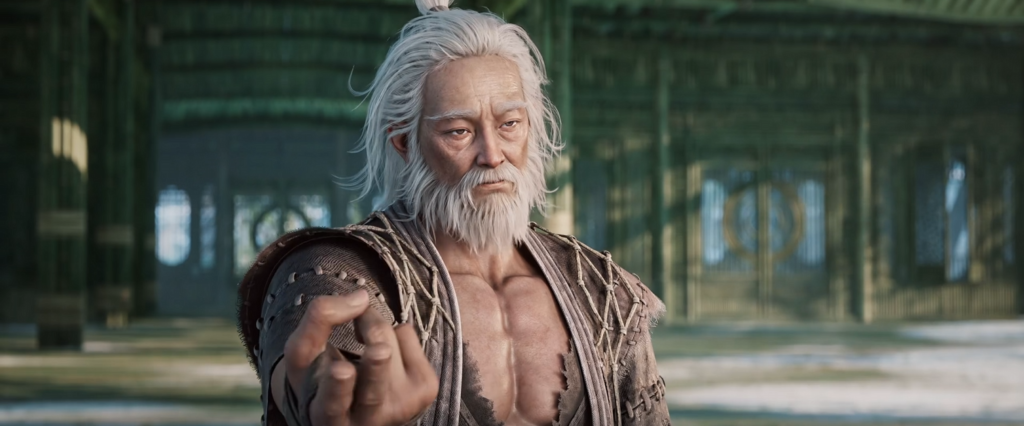
The most electrifying moment of the season was undoubtedly the “fist feeding” training by the peak Martial God, Cui Cheng. Suppressing his realm to the third tier, Cui Cheng subjected Chen Ping’an to a winter of brutal, relentless combat. Chen Ping’an endured 31 earth-shattering fists, breaking bones and shedding blood, yet continually roared, “Again!” This ordeal, animated with stunning ink-wash visual style artistry hailed as a “new benchmark for domestic donghua,” was more than a fight. It was the forging of a will. Chen Ping’an’s breakthrough into the “Strongest Third Realm Warrior” was crystallized in his unwavering “Fist Intent That Does Not Retreat.” The philosophical core of this scene—”The freedom of the strong should be bounded by the freedom of the weak“—resonated deeply with audiences, defining the series’ moral compass.
2. Heartfelt Devotion: 500 Handwritten Letters
Beyond the action, the production team’s sincerity captured hearts. To thank the fans, the crew handwrote over 500 personal letters upon the season’s conclusion. These letters, filled with gratitude for the audience’s companionship and honest reflections on the challenges of production, showcased a rare level of dedication. This gesture, coupled with teasers for the “Sword Qi Great Wall” arc in Season 3 and a derivative film, The Thirteen’s Contest, has built immense goodwill and anticipation.
Character Deep Dives: The Souls of “The Sword Come”
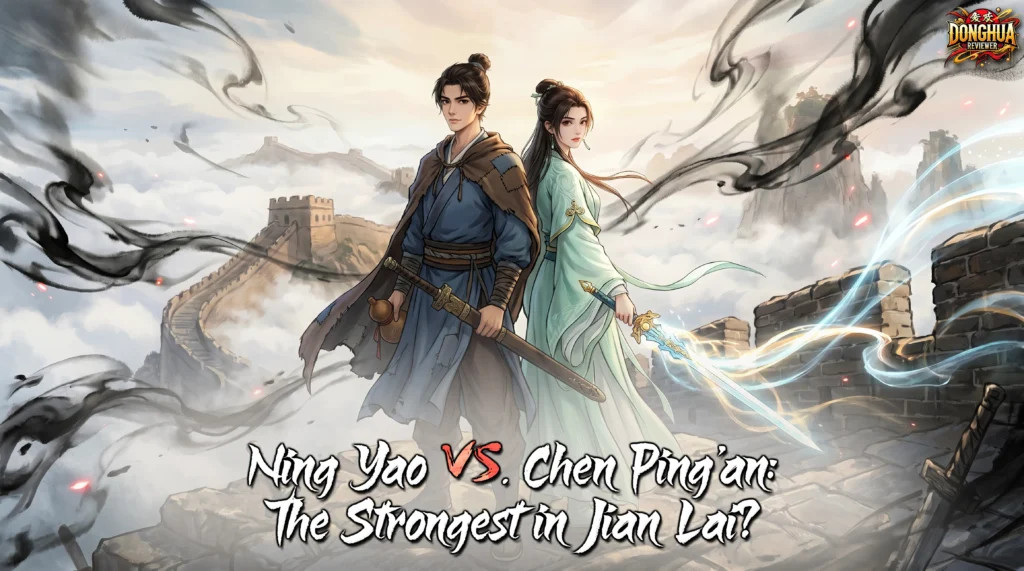
Ning Yao vs. Chen Ping’an: Who Is Truly the Strongest in The Sword Come?
The debate over who reigns supreme in the world of The Sword Come—the prodigious swordswoman Ning Yao or the tenacious underdog Chen Ping’an—is one of the most heated among fans. While Ning Yao’s talent is described as “out of this world,” Chen Ping’an’s journey is one of relentless accumulation. So, who would win in a fight? The answer isn’t straightforward and depends entirely on the timeline.
The Short Answer: It’s Complicated
If we’re talking about raw, innate talent and early-to-mid story dominance, Ning Yao wins effortlessly. She is a natural-born killer with a sword, and for most of the series, she is far stronger than Chen Ping’an.
However, if we’re discussing peak power and endgame capabilities, Chen Ping’an ultimately surpasses her. Through a combination of dual-path cultivation (Sword + Martial Arts), profound机缘 (opportunities), and sheer willpower, Chen Ping’an eventually reaches a height that even Ning Yao’s pure talent cannot match.
Ning Yao: The Unrivaled Sword Prodigy
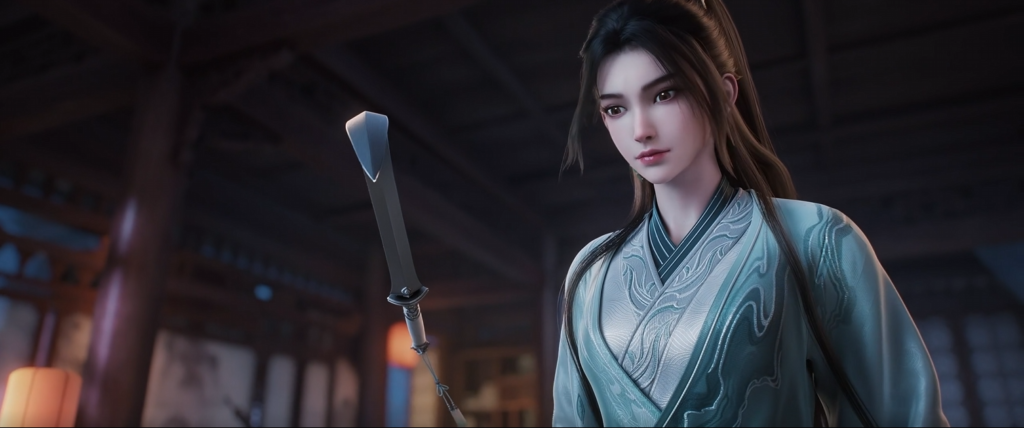
Ning Yao is the definition of a “cheat character” in the best way possible. Her strength is not just in her level but in the purity and speed of her growth.
- The “Monster” Talent: She is an innate Sword Immortal prodigy, born with a Sword Heart that is transparent and pure. She masters incredibly complex sword techniques like the “Eighteen Halts of Sword Qi” in the time it takes others to blink. As the saying goes in the novel: “There are two types of swordsmen in the world: Ning Yao, and everyone else.”
- Blistering Speed: She becomes a 14th-realm Pure Sword Immortal by the age of 44, a record-breaking feat that stuns even the ancient powers of the world. For context, this is a realm that most cultivators take thousands of years to reach, if they ever do.
- Peak Combat Prowess: In a direct sword fight, very few characters in the entire series can match her ferocity and killing intent. She is the undisputed master of confrontation.
Verdict: From their first meeting in Lizhu Cave Heaven until the later stages of the story, Ning Yao could defeat Chen Ping’an with minimal effort. His survival would depend on her mercy or his ability to run away.
Chen Ping’an: The Accumulated Masterpiece
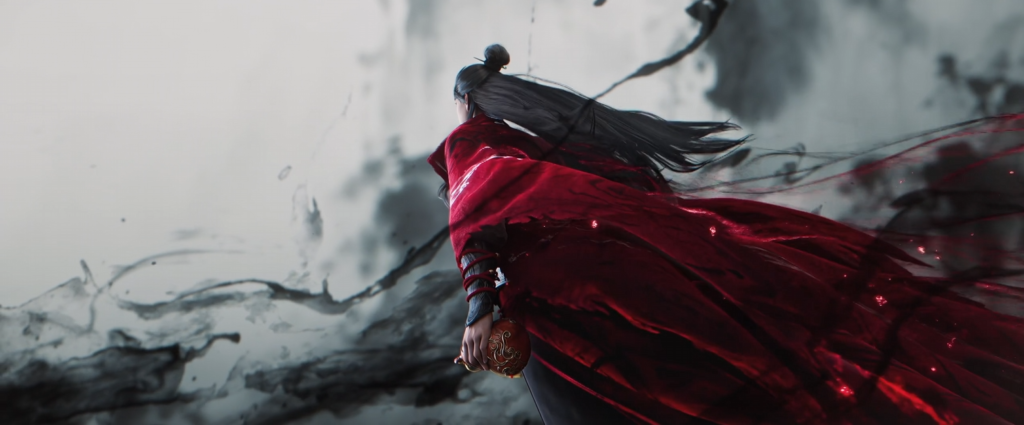
Chen Ping’an starts as the ultimate underdog—a poor orphan with a broken foundation. His strength doesn’t come from innate talent but from an inhuman level of perseverance and the accumulation of countless foundational advantages.
- The Late Bloomer: While Ning Yao is already a star, Chen Ping’an is painstakingly building his base. He practices the “One Million Punch” regimen under Cui Cheng, masters multiple sword arts, and survives countless life-and-death trials not through talent, but through grit.
- Dual-Path Supremacy: Chen Ping’an’s ultimate advantage is that he walks both the Path of the Sword and the Path of the Martial Artist (武夫). He eventually reaches the 11th Martial Realm (武神境, God of War realm), which is equivalent to a 14th-realm cultivator, on top of his high-level sword cultivation.
- The Final Boss: By the end of the story, Chen Ping’an is heavily implied to have touched the 15th Realm and taken on the mantle of the “One” (the old Heavenly Court Master). He becomes the lynchpin that holds the new world order together, a role that requires power beyond just swordplay.
Verdict: In the final analysis, Chen Ping’an’s composite strength—his unbreakable body, his strategic mind, his multiple life-saving trump cards, and his ultimate realm—would allow him to narrowly overcome Ning Yao’s pure sword intent. It would be an extreme-diff fight, but the numbers and narrative point to him as the ultimate victor.
Head-to-Head Comparison Table
| Aspect | Ning Yao | Chen Ping’an | Winner |
|---|---|---|---|
| Innate Talent | SSS+ Rank (Heaven-Defying) | A Rank (Hardworking) | Ning Yao |
| Cultivation Speed | Extremely Fast (44-year 14th Realm) | Steady & Slow (Relies on fortunate opportunities.) | Ning Yao |
| Sword Dao Purity | Perfect (The Standard for Sword Cultivators) | Excellent (But mixed with other arts) | Ning Yao |
| Comprehensive Combat | Pure Attack, Glass Cannon (Early on) | Balanced (Attack, Defense, Endurance) | Chen Ping’an (Late Game) |
| Peak Realm/Status | 14th Realm Sword Immortal | ~15th Realm / New World Pillar | Chen Ping’an |
| Who Wins a Duel? | Early & Mid Story: Ning Yao | End of Story: Chen Ping’an | Context-Dependent |
Yin and Yang
The beauty of Jian Lai is that this isn’t a simple shounen-style power-scaling debate. Ning Yao and Chen Ping’an are two halves of a whole. She is the unattainable genius that he looks up to and chases for most of his life. Her existence pushes him to become better. In turn, he is the steady rock that grounds her and provides a home for her heart.
In a death battle at their absolute peaks, Chen Ping’an likely edges out due to his versatility and narrative role. But in the realm of pure, unadulterated swordcraft, Ning Yao remains the Queen.
Zhigui: The “White-Eyed Wolf” Dragon’s Path to Redemption
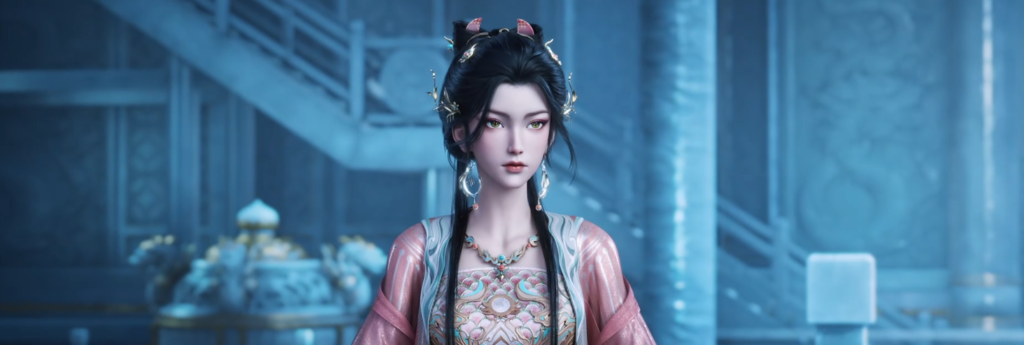
Zhigui’s journey is one of the most poignant arcs. As the pearl of the last True Dragon, she began as a seemingly ungrateful creature. Saved by Chen Ping’an, she abandoned him for the Prince Song Jixin, rich in dragon aura, and followed him to the Great Sui Empire.
- The Illusion of Power: In the Great Sui, she found not refuge but a gilded cage of political calculation. Prince Song viewed her as a tool, and the court schemed against her. The warmth and unconditional kindness she received from Chen Ping’an in Mud Vase Alley stood in stark contrast to this cold, transactional world.
- The Catalysts for Return: Two acts of pure kindness called her back. First, the dying care of the Sage Qi Jingchun, who told her, “After leaving home, take good care of yourself.” Second, Chen Ping’an’s ultimate act: using his heart’s blood to sever the master-servant contract that bound her, granting her true freedom without asking for anything in return.
- Return to Roots: Her decision to return to the dilapidated Lizhu Cave Heaven wasn’t a step backward, but the beginning of her self-redemption. It was a return to the only place where she had experienced genuine sincerity, setting her on a path to eventually become the Dragon Lord who would defend a continent.
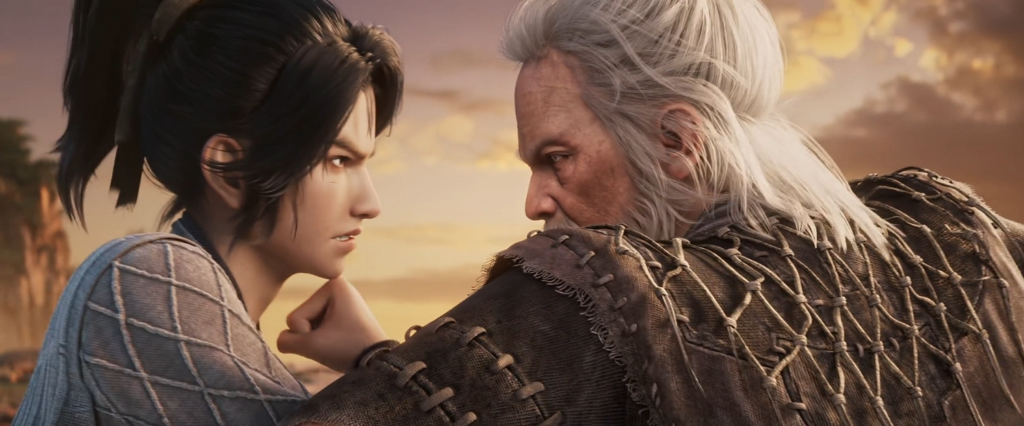
Cui Cheng: The “Mad” Half-Step Martial God
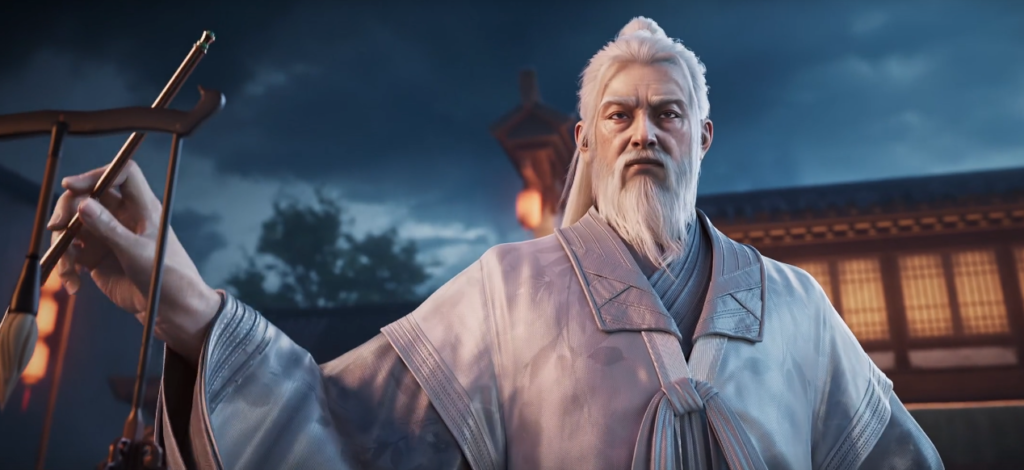
The tragedy of Cui Cheng is a powerful exploration of Dao Heart collapse. Once a peak 10th-realm warrior and pillar of the Cui clan, his descent into madness (“Cui the Madman”) had multifaceted causes:
- The Betrayal of a Grandson: His prized grandson, Cui Chan (later Cui Dongshan), betrayed their master, the Literary Sage, during a great Confucian debate, shattering the school. Cui Cheng blamed himself for his harsh upbringing of the boy, carrying immense guilt.
- The Limits of Power: Despite his world-shaking fists, he was powerless to mend his grandson’s path or restore his master’s honor. The conflict between his immense martial power and his moral failure shattered his Dao Heart.
- Path to Peace: His madness was a combination of heart-demons and the violent backlash of his own immense, uncontrolled martial will. He found eventual peace and clarity at Luopo Mountain, guided by the Chicken Soup Monk and through dedicating himself to teaching Chen Ping’an and Pei Qian. His final choice to forgo the true Martial God realm to protect his new family cemented his role as a tragic yet redeemed guardian.
A’Liang: The Charismatic Fan Favorite
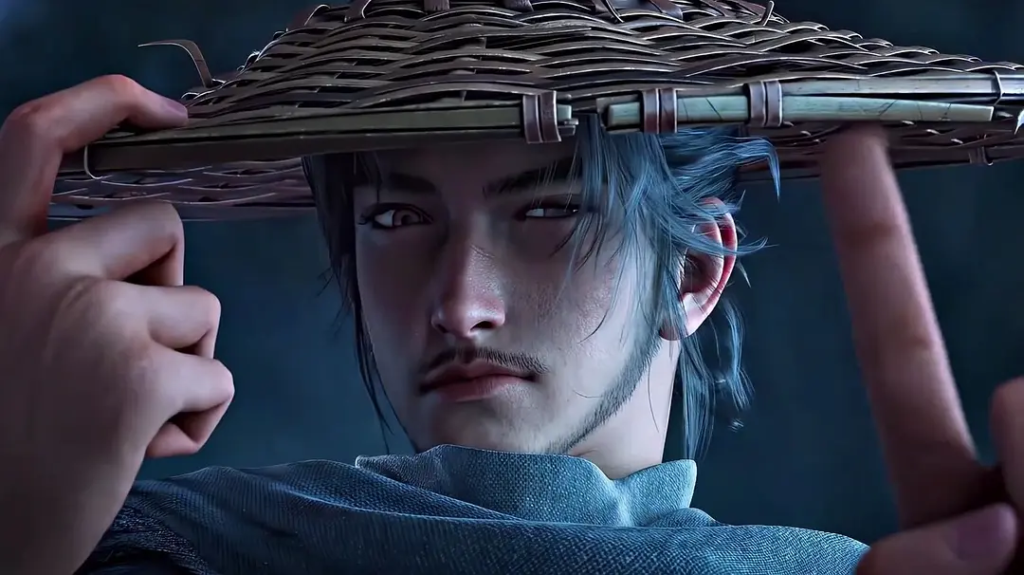
As one analysis highlights, A’Liang emerged as the unequivocal breakout star of Season 2. His appeal is a perfect storm of factors:
- Charismatic Design: His effortlessly cool, playful, and supremely confident character design stands out in a series with many characters.
- Unmatched Power: As a top-tier powerhouse, his actions, like single-handedly taking on the Great Li Dynasty or gifting swords to the Great Wall’s defenders, are consistently epic.
- Loyalty and Heart: His unwavering support for Chen Ping’an and his righteous actions define the chivalric (xia) spirit. His 32-minute battle to destroy the “False White Jade Capital” was a high point of the season, solidifying his popularity.
Looking Ahead: Major Plots and Theories
The “Thirteen’s Contest”: A Plot Against a Prodigy
This pivotal event is analyzed as a meticulously crafted trap by the Demon Clan, not to win a battle, but to destroy Ning Yao before she could mature.
- The Goal: The Yaozu, foreseeing her potential to become a second Great Wall like Chen Qingduo, sought to shatter her Sword Heart. They could not kill her under the watchful eye of Chen Qingduo, so they aimed to “kill her heart.”
- The Method: Through a rigged 13-vs-13 duel, they manipulated the match order to force Ning Yao’s parents to fight and die before her eyes. The trauma of witnessing this at age ten was designed to cripple her spirit forever. While the human side ultimately won, the psychological damage to Ning Yao was profound, showing the Yaozu’s fear and cunning.
The Three Guardians
A fascinating fan discussion ranks Chen Ping’an’s most crucial protectors:
- Li Huai: Ranked first for his simple, unwavering loyalty. From a child sharing candy hawthorns to a powerful sage, his protection is instinctual and rooted in pure familial love.
- Cui Chan (Cui Dongshan): The “strict teacher” who operates in the shadows. His constant schemes and opposition are revealed to be a brutal method of forcing rapid growth upon Chen Ping’an, paving his path through adversity.
- Zuo You: The straightforward, powerhouse senior brother. His protection is simple and violent: anyone who threatens his junior brother faces his sword. He is the ultimate enforcer.
Lu Chen Saves He Xiaoliang: A Genuine Rescue or a Calculated Move?
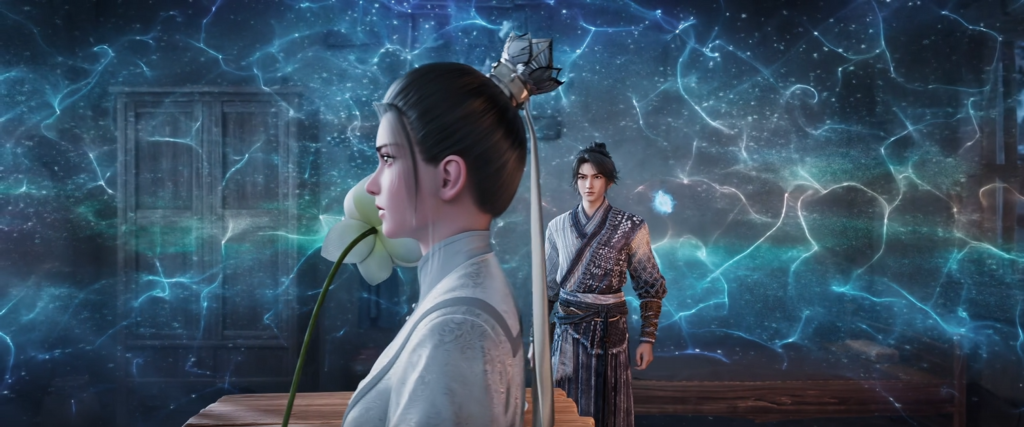
In the vast, intricate world of Jian Lai, every action by Lu Chen—the third disciple of the Dao Ancestor and the third overseer of the White Jade Capital—is far more complex than it appears. When he descended from the heavens to intervene, kicking aside the scheming Xuanfu Zhenren and taking He Xiaoliang as his disciple, was it a righteous act of saving someone from peril, or a meticulously calculated move in a grander game?
To understand this, we must look beyond the surface conflict and see Lu Chen’s true identity and the scale on which he operates.
Who is Lu Chen? He Sees Not “Individuals,” but a “Cosmic Experiment”
Lu Chen is no ordinary chivalrous hero, nor is he a simple “master.” He is a 14th-realm Great Cultivator, a direct disciple of the Dao Ancestor, a strategist who uses heaven and earth as his chessboard and all living beings as his pieces. His perspective has long transcended sect rivalries, personal grievances, and even simple notions of right and wrong. His goal is the verification of the Great Dao itself.
From this vantage point, his rescue of He Xiaoliang can be seen as a move with at least three layers of intention:
1. Crushing Decay and Upholding the “Façade” of the Daoist Orthodoxy
Xuanfu Zhenren’s actions—using his position as master to force a dual cultivation partnership—were a vile corruption of the teacher-student relationship and a stain on the Daoist north sect, Shengao Zong. While Lu Chen himself is unconstrained by worldly morals, as a leading figure of the Daoist orthodoxy (the White Jade Capital represents the orthodox Heavenly Court), he could not openly tolerate such a publicly disgraceful act that undermined the very foundation of sect rules. His intervention served to publicly slap down this decay and reinforce the “rules” and “dignity” of the orthodox system. It was a warning and a demonstration of authority.
2. Obtaining a Rare “Specimen” and Guiding Her Path
He Xiaoliang, the “Number One Beauty of the Vase Province,” possessed far more than just beauty. Her “unparalleled good fortune” and “Dao Heart that sees clearly” made her an exceptionally rare talent. In Lu Chen’s eyes, she was a near-perfect “specimen” for observing and influencing the flow of fortune and the path of the Dao. Taking her as a disciple removed her from a rotten environment (Shengao Zong) and placed her on a “correct” path of development, which he could observe—the path of the Qingliang Sect. This was, in essence, guiding a high-quality variable into a predetermined experimental track.
3. The Most Critical Layer: Forging a Connection with Chen Ping’an
This is likely the most fundamental reason. Lu Chen’s condition for taking He Xiaoliang as a disciple—forcing her to form a Daoist partnership with Chen Ping’an—reveals his true aim. Chen Ping’an, the “Half of the One,” was the most crucial variable in the new cosmic order Lu Chen was observing and, to an extent, orchestrating. By forcibly intertwining He Xiaoliang’s profound fortune with Chen Ping’an’s unique destiny, Lu Chen was creating a profound, karmic connection. This was not for their personal happiness, but to create a new “observation point” and “catalyst” for the Great Dao itself. He was intertwining their fates to see how this new variable would develop and influence the grand scheme, especially the path of the key figure, Chen Ping’an. In this grand “cosmic experiment,” He Xiaoliang’s personal will was insignificant; what mattered was her role as a connector to Chen Ping’an’s destiny.
A Rescue That is Inherently a Strategic Move
Therefore, asking whether Lu Chen’s actions were “genuine rescue” or “cold calculation” presents a false dichotomy. In the worldview of a 14th-realm cultivator like Lu Chen, these concepts are not separate.
- From He Xiaoliang’s and the world’s perspective, it was undoubtedly a genuine rescue. He saved her from a vile fate and granted her a brilliant future as the founder of the Qingliang Sect.
- However, from Lu Chen’s own perspective and the overarching narrative, it was a masterful strategic move. It served to maintain orthodoxy, acquire a valuable subject, and, most importantly, create a karmic link to influence the central variable of the era—Chen Ping’an.
This is Lu Chen’s way: his kindness is never just kindness, and his calculations are profound enough to appear as destiny. He Xiaoliang, upon becoming a powerful sect master in the Northern Juju Luzhou, may never know to what extent her “freedom” was itself a thread in a grand tapestry woven by her master. For Lu Chen, saving a disciple and placing a piece on the board are the same action—two sides of the same coin in the realm of the supreme Dao.
Conclusion: A Universe Poised for More
The Sword Come, Season 2 has successfully expanded its universe, delivering not just breathtaking animation but also profound emotional and philosophical depth. It has turned characters like A’Liang into icons and explored complex themes of redemption, sacrifice, and growth through figures like Zhigui and Cui Cheng.
With the stage set for the epic Sword Qi Great Wall arc in Season 3, the promise of exploring Ning Yao’s homeland, Chen Ping’an’s search for his love, and the resolution of deep-seated conflicts like the Booklet Lake ordeal, the future of this Jianghu is incredibly bright. The series proves that in the world of Sword Come, a good story, told with heart and spectacular artistry, will never lack an audience. The journey of the sword has just begun.
FAQ
The most iconic scene is Cui Cheng’s “Fist Feeding” training at Luopo Mountain. In a brutal winter-long session, he suppresses his realm to forge Chen Ping’an’s will, culminating in a stunning ink-wash style battle and the thematic line: “The freedom of the strong should be bound by the freedom of the weak.”
A’Liang is widely considered the breakout star. His charismatic design, unmatched power (showcased in his solo battle against the “False White Jade Capital”), and loyal, roguish personality made him a massive fan favorite.
Zhigui returned after realizing the Great Sui Empire was a cage of political scheming. She was called back by acts of true kindness: Sage Qi Jingchun’s final care and, most importantly, Chen Ping’an severing their master-servant contract to grant her unconditional freedom, showing her what genuine warmth was.
Ning Yao is a once-in-an-era prodigy. She became a 14th Realm Pure Sword Immortal in just over 40 years, breaking records. Her talent is portrayed as instinctual; she mastered techniques like the “Eighteen Halts of Sword Qi” almost instantly, leading to the saying: “There are two types of swordsmen in the world: Ning Yao, and everyone else.”
The “Thirteen’s Contest” was a rigged 13-vs-13 duel orchestrated by the Yaozu (Demon Race). Its primary goal wasn’t victory but to psychologically destroy the child prodigy Ning Yao by forcing her to watch her parents die, aiming to shatter her Sword Heart and prevent her from becoming an unstoppable force.
Season 3 will primarily adapt the Sword Qi Great Wall arc, following Chen Ping’an’s journey to find Ning Yao. It will also delve into the Booklet Lake ordeal, a major test of his principles. The season is expected to have expanded episodes and upgraded animation.